

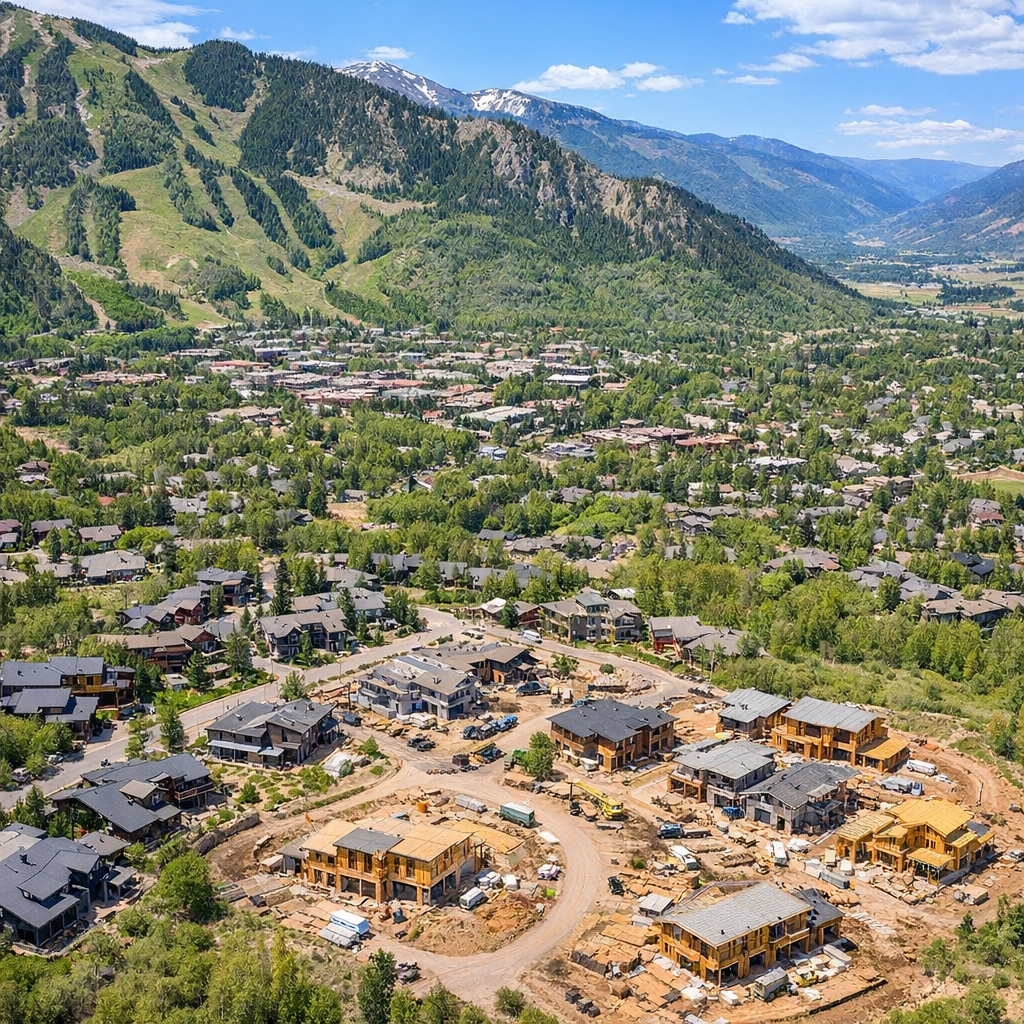
Aspen’s housing market continues to evolve, reflecting both the town’s desirability and the challenges of maintaining affordability for its workforce. Recent developments and market trends offer insight into the current state and future direction of housing in our community.
Market Trends
As of March 2026, the median sale price for homes in Aspen reached $3.4 million, marking a 7.1% increase from the previous year. The median price per square foot stands at $2,270, a 32.3% decrease year-over-year. Homes are selling faster, with an average of 124 days on the market compared to 147 days last year. However, the number of homes sold in March decreased to 15 from 25 the previous year, indicating a tightening market. Source
Affordable Housing Initiatives
To address the pressing need for affordable housing, several significant projects are underway:
Lumberyard Affordable Housing Project
Construction has commenced on the Lumberyard development, located on an 11-acre site near the Airport Business Center along Highway 82. This project aims to deliver 277 deed-restricted rental apartments in two phases. Phase A, currently underway, includes 104 units and substantial public infrastructure improvements. The development will serve households earning between 50% and 240% of the Area Median Income (AMI), providing housing for essential workers such as teachers and healthcare professionals. Source
Burlingame Ranch Phase III
The Burlingame Ranch Phase III project is progressing, with plans to add 79 new affordable housing units. This development focuses on sustainable design and community integration, aiming to provide quality housing for Aspen’s workforce. Source
Beaumont Inn Redevelopment
Aspen Valley Health’s plan to redevelop the Beaumont Inn has received city council approval. The project will transform the existing 25 units into 60 one-bedroom units designated for full-time hospital staff, addressing critical employee housing needs. Source
Challenges and Considerations
While these initiatives are steps in the right direction, challenges remain. The high cost of land and construction, coupled with stringent zoning regulations, complicate the development of new housing. Additionally, balancing the preservation of Aspen’s unique character with the need for growth requires careful planning and community engagement.
As Aspen continues to navigate these complexities, staying informed about market trends and development projects is essential for residents and prospective homebuyers alike. The commitment to expanding affordable housing options reflects a broader effort to maintain the town’s vibrancy and inclusivity.